September to December, 2020 North America Chado Relay
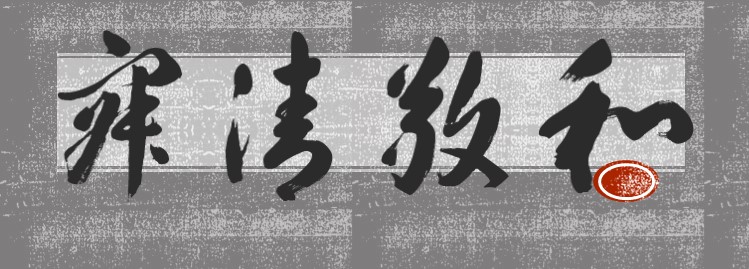
On behalf of the North America Advisory Committee, thank you for your continued support of and interest in Urasenke activities. We hope that this finds you in the best of health during these very unprecedented times. We are writing you today to ask your participation in an online Chado Relay schedule for this Fall. We are requesting that members of each of the 36 Urasenke Tankokai associations throughout North America take part in this event by posting on a newly created Facebook page photos and captions that will spread Daisosho-sama’s message of “Peacefulness through a Bowl of Tea.” We request that each Association also create a post sharing some background on your Association, annual activities (pre-COVID) or significant events. A few months ago. the Urasenke Tankokai Quebec Association started an online relay for its members which can serve as reference. The Chado Relay will start on September 2, 2020, which marks the 75th anniversary of the end of World War II and will continue through the end of the year. Like the Olympic Torch Relay, it will stop in your city for two-to-three days before being passed to the next association. The purpose of the relay is to create stronger ties between members and associations, to show colleagues around the world how we are continuing our tea practice, and to introduce broader audiences to the spirit of “harmony, respect, purity and tranquility.” As you know, since the beginning of the COVID pandemic, Oiemoto Sen Soshitsu XVI began posting video message and streaming tea procedures online. Social media is becoming an important tool to keep us connected and encourage us to come out of this pandemic stronger as a community. We anticipate receiving messages from Daisosho-sama and Oiemoto-sama to serve as words of encouragement and guidance, and we are currently creating a schedule and guidelines for the Chado Relay. In the meantime, please let your members know that this event will be taking place September – December 2020 and designate a “local coordinator” who can be the point person for your Association by organizing your members and posting on social media. Thank you for your cooperation in making this the North America Chado Relay a success! Sincerely,
Facebook for Chado Relay https://www.facebook.com/NAChadoRelay Homepage for Chado Relay https://www.urasenkenorthamerica.org/
Mas existem diversas escolas de Cerimonia do Cha. Após Toyotami Hideyoshi ordernar Sen no Rikkyu a cometar suicídio, sua familia caiu em desgraca e teve que se esconder e seu filho direto nao teve filhos. Mais tarde, sua filha teve um filho Sen Sotan, que continuou o desenvolvimento da arte da cerimonia do Cha. Ele herdou o terreno e dividiu-o entre seus filhos que fundaram as Tres-Senke: Omotesenke, Urasenke e Mushanokojisenke. A que mais se divulgou pelo mundo foi a Urasenke.
San-Senke
There are three historical households (家) directly descended from the 16th-century tea master Sen no Rikyū
which are dedicated to transmitting the Way of Tea that was developed
by their mutual family founder, Sen no Rikyū. They are known
collectively as the san-Senke (三千家), or "three Sen houses/families." These are the Omotesenke, Urasenke, and Mushakōjisenke. Another line, which was located in Sakai and therefore called the Sakaisenke (堺千家), was the original Senke (Sen house). Rikyū's natural son, Sen Dōan,
took over as head of the Sakaisenke after his father's death, but the
Sakaisenke soon disappeared because Dōan had no offspring or successor.
The school named Edosenke (江戸千家; lit., Edo Sen house/family) is not
descended by blood from the Sen family; its founder, Kawakami Fuhaku
(1716–1807), became a tea master under the 7th generation head of the
Omotesenke line, and eventually set up a tea house in Edo (Tokyo), where
he devoted himself to developing the Omotesenke style of the Way of Tea
in Edo.
The san-Senke arose from the fact that three of the four sons of Genpaku Sōtan (Sen no Rikyū's grandson) inherited or built a tea house, and assumed the duty of passing forward the tea ideals and tea methodology of their great-grandfather, Sen no Rikyū. Kōshin Sōsa inherited Fushin-an (不審菴) and became the head (iemoto) of the Omotesenke line; Sensō Sōshitsu inherited Konnichi-an (今日庵) and became iemoto of the Urasenke line; and Ichiō Sōshu built Kankyū-an (官休庵) and became iemoto
of the Mushakōjisenke line. The names of these three family lines came
about from the locations of their estates, as symbolized by their tea
houses: the family in the front (omote), the family in the rear (ura),
and the family on Mushakōji Street.
The Way of Tea perfected by Sen no Rikyū and furthered by Sen Sōtan is known as wabi-cha. The san-Senke have historically championed this manner of tea.
Other schools
The three lines of the Sen family which count their founder as Sen no
Rikyū are simply known as the Omotesenke, Urasenke, and Mushakōjisenke.
Schools that developed as branches or sub-schools of the san-Senke, or
separately from them, are known as "~ryū" (from ryūha),
which may be translated as "school" or "style." New schools often formed
when factions split an existing school after several generations. There
are many of these schools, most of them quite small.
san-Senke
There are three historical households (家) directly descended from the 16th-century tea master Sen no Rikyū
which are dedicated to transmitting the Way of Tea that was developed
by their mutual family founder, Sen no Rikyū. They are known
collectively as the san-Senke (三千家), or "three Sen houses/families." These are the Omotesenke, Urasenke, and Mushakōjisenke. Another line, which was located in Sakai and therefore called the Sakaisenke (堺千家), was the original Senke (Sen house). Rikyū's natural son, Sen Dōan,
took over as head of the Sakaisenke after his father's death, but the
Sakaisenke soon disappeared because Dōan had no offspring or successor.
The school named Edosenke (江戸千家; lit., Edo Sen house/family) is not
descended by blood from the Sen family; its founder, Kawakami Fuhaku
(1716–1807), became a tea master under the 7th generation head of the
Omotesenke line, and eventually set up a tea house in Edo (Tokyo), where
he devoted himself to developing the Omotesenke style of the Way of Tea
in Edo.
The san-Senke arose from the fact that three of the four sons of Genpaku Sōtan (Sen no Rikyū's grandson) inherited or built a tea house, and assumed the duty of passing forward the tea ideals and tea methodology of their great-grandfather, Sen no Rikyū. Kōshin Sōsa inherited Fushin-an (不審菴) and became the head (iemoto) of the Omotesenke line; Sensō Sōshitsu inherited Konnichi-an (今日庵) and became iemoto of the Urasenke line; and Ichiō Sōshu built Kankyū-an (官休庵) and became iemoto
of the Mushakōjisenke line. The names of these three family lines came
about from the locations of their estates, as symbolized by their tea
houses: the family in the front (omote), the family in the rear (ura),
and the family on Mushakōji Street.
The Way of Tea perfected by Sen no Rikyū and furthered by Sen Sōtan is known as wabi-cha. The san-Senke have historically championed this manner of tea.
Other schools
The three lines of the Sen family which count their founder as Sen no
Rikyū are simply known as the Omotesenke, Urasenke, and Mushakōjisenke.
Schools that developed as branches or sub-schools of the san-Senke, or
separately from them, are known as "~ryū" (from ryūha),
which may be translated as "school" or "style." New schools often formed
when factions split an existing school after several generations. There
are many of these schools, most of them quite small.
Chinshin-ryū 鎮信流 (founder: Matsura Chinshin {1622-1703], who was
magistrate of Hizen Hirado, present-day Hirado in Nagasaki Prefecture).
The school takes after the "warrior-house style of tea" (buke-cha) that was promoted by the daimyō Katagiri Sekishū. The school is also known as the Sekishū-ryū Chinshin-ha (Chinshin branch of the Sekishū school).
Fujibayashi-ryū 藤林流 (a.k.a. Sekishū-ryū Sōgen-ha; see Sekishū-ryū below)
Fuhaku-ryū 不白流 (founder: Kawakami Fuhaku). This school, also called
the Omotesenke Fuhaku-ryū, evolved after the death of Kawakami Fuhaku,
when this faction split from the Edosenke school that he had founded.[1]
Hayami-ryū 速水流 (founder: Hayami Sōtatsu [1727-1809], who learned tea
under the 8th Urasenke iemoto, Yūgensai, and was allowed by him to
found a school of his own in Okayama)[2]
Higo-koryū 肥後古流[3]
(The word Higo refers to present-day Kumamoto Prefecture; koryū
literally means "old school"). This is one of the schools of tea
traditionally followed by members of the old Higo domain, and is
considered to be faithful to Sen Rikyū's tea style; that is, it is tea
of the "old school." The school has been led by three families, and
therefore is divided into the following three branches:
Furuichi-ryū 古市流
Kobori-ryū 小堀流
Kayano-ryū 萱野流
Hisada-ryū 久田流
Hosokawasansai-ryū 細川三斎流
Horinouchi-ryū 堀内流
Kobori Enshū-ryū 小堀遠州流 (founder: Kobori Masakazu [Kobori Enshū]
(1579-1647)) and passed down through Enshū's brother Kobori Masayuki
(1583-1615). Grand Master XVI, Kobori Soen currently runs the school.)[4]
Kogetsuenshū-ryū 壺月遠州流
Matsuo-ryū 松尾流 (founder: Matsuo Sōji [1677-1752], great grandson of a close disciple of Sen Sōtan
who had the same name, Matsuo Sōji). The founder of the Matsuo school
hailed from Kyoto and learned tea under the 6th Omotesenke iemoto,
Kakukakusai. He later settled in Nagoya, where the Matsuo school is
centered. A number of the successive Matsuo-ryū iemoto in history have
apprenticed under the 'reigning' Omotesenke iemoto.[5]
Mitani-ryū 三谷流
Miyabi-ryū 雅流
Nara-ryū 奈良流
Oie-ryū 御家流 (founder: the feudal lord Andō Nobutomo [1671-1732]).
The school traces its roots to Sen Rikyū, and from Rikyū as follows: Hosokawa Sansai, Ichio Iori, Yonekitsu Michikata (1646-1729), and then Andō Nobutomo. In the Edo period,
the Tokugawa shōgun allowed the Andō family the right to conduct
official celebratory ceremonies, and the family was known as etiquette
authorities.[6]
Oribe-ryū 織部流 (founder: Furuta Shigenari
[a.k.a. Furuta Oribe]). According to the Japanese tea historian Tsutsui
Hiroichi, after the death of Sen no Rikyū, his chadō follower Furuta
Oribe succeeded him as the most influential tea master in the land.
Oribe was chadō officer for the second Tokugawa shogun, Tokugawa Hidetada, and had a number of notable chadō disciples, foremost of whom was Kobori Enshū. For political reasons, Oribe was ordered to commit seppuku
(ritual suicide), and consequently his family did not become an
official tea-teaching family. Through the succeeding generations, the
family head held the position of karō (intendant) to the daimyō headquartered at Oka Castle in present-day Oita Prefecture, Kyūshū. With the Meiji Restoration
in the late 19th century, and the family's consequent loss of its
hereditary position, the 14th-generation family head, Furuta Sōkan, went
to the new capital, Tokyo, to attempt to reestablish the Oribe school
of tea. Today, Kyūshū and especially Oita have the highest concentration
of followers of this school.[7]
Rikyū-ryū 利休流
Sakai-ryū 堺流
Sekishū-ryū 石州流 The school developed by the daimyō Katagiri Sadamasa (a.k.a. Katagiri Sekishū) (1605–73), nephew of Katagiri Katsumoto and second-generation lord of the Koizumi Domain. Sekishū was chanoyu teacher to the fourth Tokugawa shōgun, Tokugawa Ietsuna,
and his chanoyu style therefore became popular among the feudal ruling
class of Japan at the time. The Sekishū-ryū school of chanoyu was passed
forward by his direct descendants, and also through his talented
chanoyu followers who became known as the founders of branches (派,
"-ha") of the Sekishū school.[8]
Sekishū-ryū Chinshin-ha 石州流鎮信派 (see Chinshin-ryū above)
Sekishū-ryū Ikei-ha 石州流怡渓派 (founder: the Rinzai Zen sect priest Ikei
Sōetsu [1644-1714], founder of the Kōgen'in sub-temple at Tōkaiji
temple in Tokyo). He studied chanoyu under Katagiri Sekishū. His chanoyu
pupil, Isa Kōtaku (1684–1745), whose family was in charge of the
Tokugawa government's tea houses, founded the Sekishū-ryū Isa-ha 石州流伊佐派.
Furthermore, the Ikei-ha chanoyu style that spread among people in
Tokyo was referred to as Edo Ikei, and that which spread among people in
the Echigo (present-day Niigata Prefecture) region was referred to as
Echigo Ikei.[10]
Sekishū-ryū Ōguchi-ha 石州流大口派
Sekishū-ryū Shimizu-ha 石州流清水派
Sekishū-ryū Sōgen-ha 石州流宗源派 (founder: Fujibayashi Sōgen 藤林宗源 [1606-95], chief retainer of the daimyō Katagiri Sekishū).[11]
Sekishū-ryū Nomura-ha 石州流野村派
Sōhen-ryū 宗偏流 (founder: Yamada Sōhen [1627-1708], one of the four close disciples of Sen Sōtan)
Muitos povos desenvolveram o hábito de consumir chá, mas poucos contribuíram tanto para o desenvolvimento de aspectos culturais como no Japão. Foi no Japão que preparar e beber o matcha, a folha do chá verde em pó diluído em água quente, tornou-se a base de uma discplina espiritual e estética que impactou a civilização japonesa.
Essa forma de preparar o chá foi levada ao Japão no século XII por monges Zen ao regressarem de viagens de estudos da China. Nos templos, matcha era utilizado como um estimulante suave para a mente durante a meditação, tinha valor medicinal e uso cerimonial simbólico. Naquele tempo, a classe nobre e os governantes o apreciavam com a função de dar sentido à exibição de objetos de arte chinesa.
A partir desses dois usos é que se originou a ideia dos encontros de chá como meio de elevação espiritual e apreciação estética. Isso fez com que fossem criadas salas especiais para esses encontros. O surgimento desse conceito estético único, de inspiração Zen, foi importante para o desenvolvimento da apreciação da sutil e austera beleza que podem ser descobertas em coisas aparentemente simples e despretensiosas.
No século XVI, Sen Rikyu (1522-1591), um homem com grande criatividade e liderança no cenário político e cultural do seu tempo, sintetizou a essência dessas idéias em sua austera "cabana" no estilo do chá. Sua sensibilidade artística e ideais embasados no Zen transformaram efetivamente o ato de preparar, servir e beber o chá numa disciplina completa, estabelecendo os fundamentos do Chado, o Caminho do Chá.
Os ideais do Chado de Sen Rikyu estão expressos nestas palavras: wa, kei, sei e jaku.
- Wa significa harmonia, que deve existir nas relações humanas, entre o homem e a natureza, na seleção dos utensílios do chá, na maneira como são utilizados e em todas as outras facetas do Chado.
- Kei significa respeito, que é dado para todas as coisas e que provém de sentimentos sinceros de gratidão pela existência delas.
- Sei significa pureza e implica em limpeza espiritual e material
- Jaku significa tranquilidade, um estado espiritual de paz.
Com base nisso, as pessoas que estudam a disciplina do Cerimonia do Cha aprendem a cuidar de cada aspecto envolvido: da ambientação, da seleção dos objetos empregados na cerimonia, da prática da etiqueta, da comida e até da água utilizada. Através do treinamento e do estudo, manifestam o desejo de refinarem e cultivarem a si mesmos enquanto seres humanos.
Após a morte de Sen Rikyu, seus ensinamentos foram transmitidos aos seus
descendentes e discípulos. Sen Shoan (1546-1614), genro de Sen Rikyu foi reconhecido como seu sucessor. O filho dele e neto de Rikkyu Sen Sotan (1576-1658) sucedeu seu pai e tornou-se a 3a geracao. Sotan teve quatro filhos. Os 2 mais velhos morreram ainda criancas. Quando seu filho cacula Sen
Soshitsu (1622-1677) atingiu os vinte anos, Sotan retirou-se para o fundo da propriedade criando a escola Urasenke e Sen Sosa (1619-1673) ficou com a frente da propriedade fundando a escola Omotesenke. Depois um dos filhos mais velhos Soshu
(1593-1675), retornou à propriedade localizada na rua Mushanokoji para fazer a 3a das 3 escolas de tradicao chamada Mushanokojisenke. Essas escolas continuam em atividade até hoje em Kyoto.
Sotan construiu nos fundos da
propriedade a sala de 8 tatamis, a sala de 4 tatamis e meio e a sala de 1 tatami e 3/4
e sao os padroes para todas as salas de cha do mundo.
Num tranquilo e velho bairro de Kyoto, capital cultural do japão a escola Urasenke da família Sen existe já há quatro séculos. As mais antigas salas de chá foram originalmente construídas pela terceira geração da família, Sen Sotan, neto do Rikyu. Esse complexo de salas de chá e jardins foi tombado como Patrimônio Cultural Importante pelo governo japonês em razão de sua relevância cultural na história e na arte japonesas. É onde o espiríto de Sen Rikyu permanece, é a casa da Urasenke e o coração do Chado para milhões de pessoas que estudam e praticam como ensinado pela Urasenke ao redor do mundo.
Desde a época do Rikyu, seus descendentes continuaram levando esse legado para as novas gerações. Cada herdeiro também acrescentou algo, sucessivamente de tal maneira que a Cerimonia do Cha permanece viva e com sentido nos tempos atuais, oferecendo um eficiente caminho para enriquecimento cultural e autodesenvolvimento, e uma fórmula atemporal para compartilhar um bonito momento graças ao chá.